




Automotive
Tesla has made an enormous point of designing the Cybercab with out a steering wheel, accelerator pedal, or brake pedal, however it seems the purpose-built robotaxi should have a method to be driven manually. A passenger riding in one among the newly deployed Cybercabs in Austin, Texas, discovered what appears to be an internal virtual joystick interface hidden throughout the vehicle’s center touchscreen. The invention adds an interesting wrinkle to Tesla’s vision of a vehicle designed from the outset to operate without conventional driver controls.
The bizarre interface was spotted by passenger Matthew Skrzypczack, who shared video of the Cybercab screen showing a joystick-style control together with instructions to press and hold it. The display also prompted the user to swipe up or all the way down to select a gear. Skrzypczack attempted to operate the controls but was unable to get the vehicle moving and eventually contacted Tesla support. Other recent coverage has shown similar controls with functions for steering, acceleration, braking, stopping, and sounding the horn.
Weird #cybercab situation! After I got within the vehicle, the display was in a unique configuration with a virtual joystick for manual driving! I even have a sense I wasn’t presupposed to see this… but I attempt to manually drive the vehicle anyway! 😂 @wholemars @DirtyTesLa @DavidMoss… pic.twitter.com/mQsoDFDbEJ
— Matthew Skrzypczak (@MatthewSkrzypc1) September 7, 2026
Tesla has not publicly detailed the aim of the interface, however the most sensible explanation is that it is meant for workers, technicians, or service personnel fairly than riders. Even a completely autonomous vehicle occasionally must be repositioned inside a service facility, charging area, manufacturing plant, or other controlled environment. Giving staff access to low-speed manual controls through the touchscreen would allow them to maneuver a Cybercab without installing a traditional steering wheel and pedal assembly that passengers would never normally use.
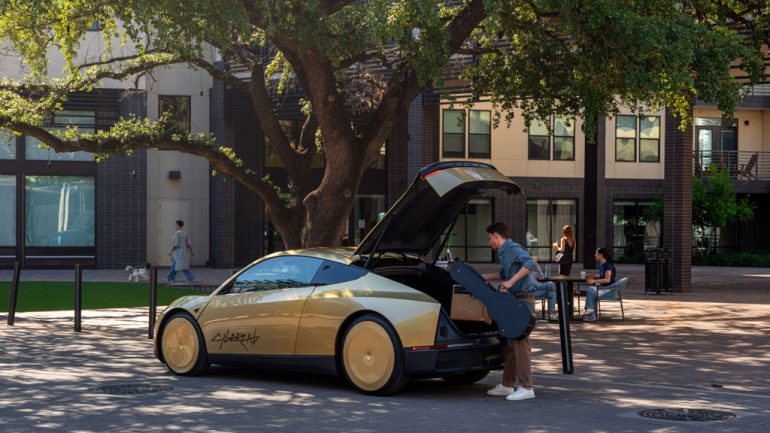
That theory is supported by separate footage showing Tesla personnel manually repositioning a Cybercab near a charging station after it stopped too distant for the charging cable to comfortably reach. The hidden interface also appeared alongside camera views related to Tesla Superchargers, suggesting that the controls could also be connected to service or depot operations. Tesla’s own rider information continues to explain the Cybercab as a completely autonomous vehicle with no steering wheel or pedals available to passengers.
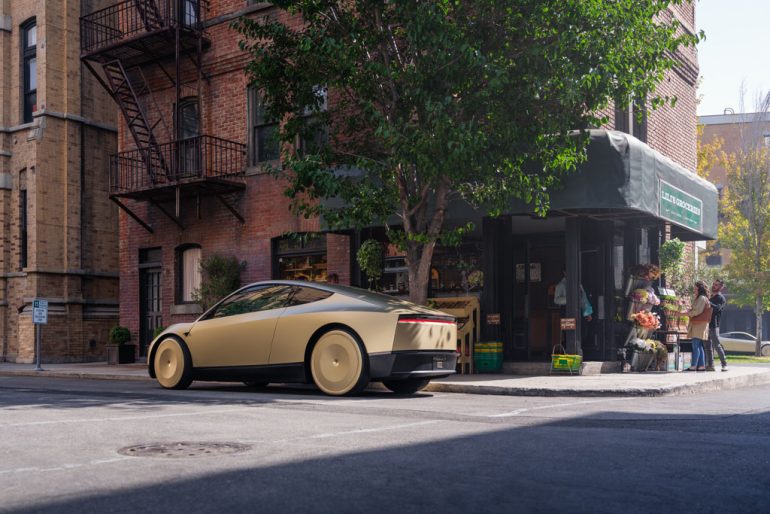
The invention doesn’t fundamentally change what the Cybercab is presupposed to be, however it does highlight one among the sensible realities of running a driverless fleet. Even a vehicle designed to eliminate human driving entirely still needs some method for technicians or fleet staff to take control when software cannot handle a specific situation. For Tesla, an on-screen joystick may simply be the fashionable equivalent of a maintenance control panel. For passengers who unexpectedly stumble across it, though, seeing a virtual steering control inside a automotive advertised as needing no manual controls is definitely enough to boost a number of eyebrows.

Lloyd Tobias is a seasoned automotive journalist and passionate enthusiast with over 15 years of experience immersed on the planet of cars. Whether it’s exploring the most recent advancements in automotive technology or keeping an in depth pulse on breaking industry news, Lloyd brings a pointy perspective and a deep appreciation for all things automotive. His writing blends technical insight with real-world enthusiasm, making his contributions each informative and fascinating for readers who share his love for the drive. When he’s not behind the keyboard or under the hood, Lloyd enjoys test driving the latest models and staying ahead of the curve in an ever-evolving automotive landscape.

This Article First Appeared At www.automotiveaddicts.com
