




The last examples of the decade-old Mitsubishi Pajero Sport are finally about to go away the Japanese brand’s Australian showrooms, before the local launch of the born-again Pajero in December.
“Our dealers have a small quantity of stock at this moment so perhaps in the subsequent few months all the pieces will go,” said Mitsubishi Motors Australia CEO Shunichi Kihara on the world debut of the brand new Pajero in Tokyo on September 2.
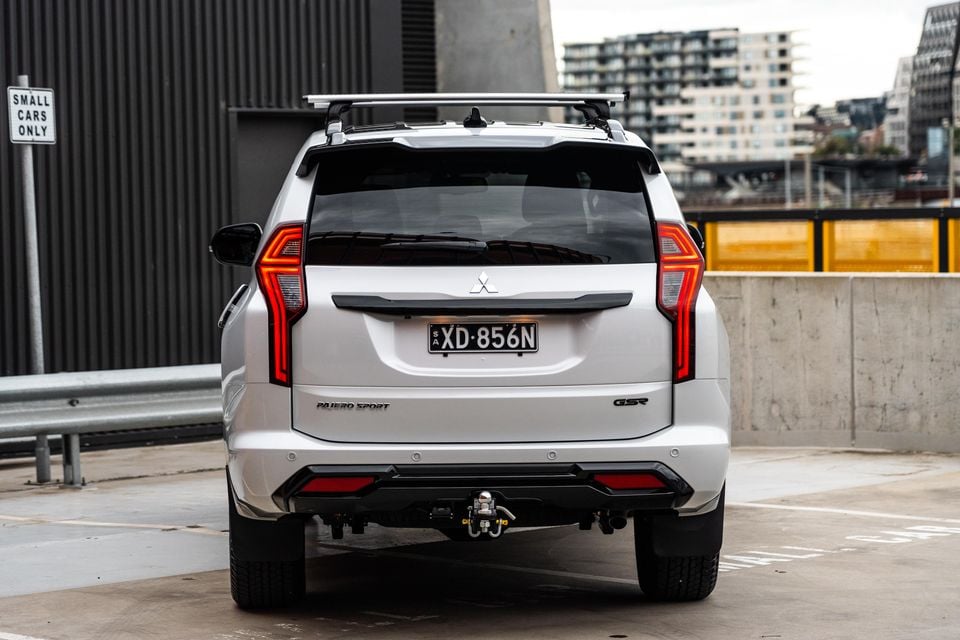
The news confirms an almost-perfect runout for a big off-road SUV that first arrived in Australia over a decade ago in December 2015, before being facelifted in January 2020 and again in May 2024, then discontinued on account of recent federal safety regulations mandated from March 2025.
Nevertheless, Mitsubishi Australia can be left with just three models when it exhausts its stockpile of Pajero Sport vehicles, which continues to make it the brand’s third-best seller behind only the Outlander medium SUV and Triton ute, and the brand new Pajero that replaces it’ll be far dearer.
Now gone from Mitsubishi’s local public website, the four-grade Pajero Sport range opened at $51,540 before on-road costs, while the fourth-generation Pajero has been priced from $68,490 plus ORCs.
Unlike the monocoque platform-based model that ceased production in 2021, the primary all-new Pajero in twenty years is predicated on a ladder-frame chassis shared with the Triton – just like the old Pajero Sport – albeit in heavily upgraded from.
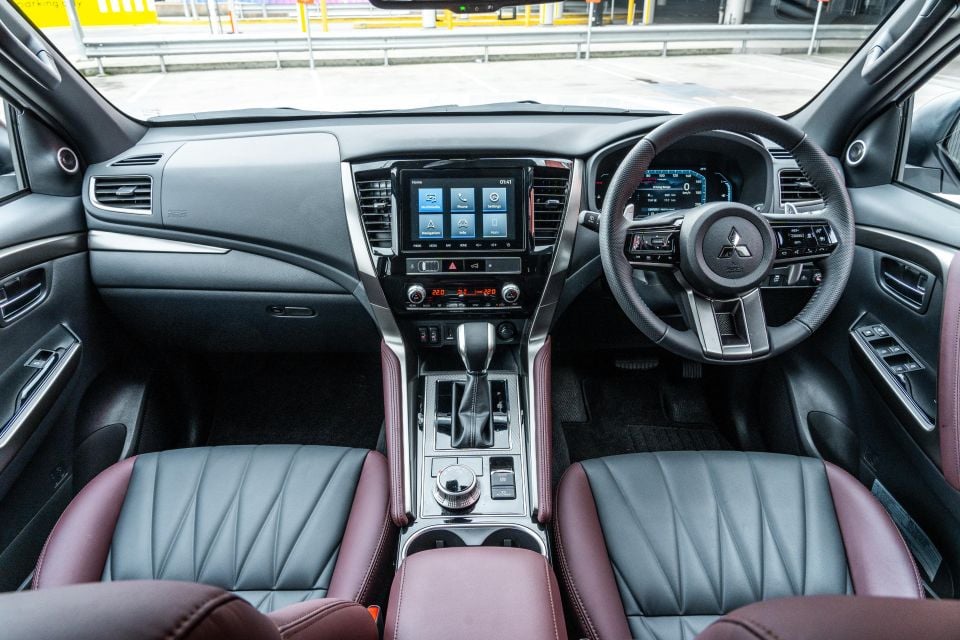
However the Pajero Sport will remain available in markets outside Australia including Recent Zealand and Thailand, where it continues to be produced alongside the related Triton and recent Pajero.
In its home market, the Pajero Sport continues to be available in entry-level GT, mid-range Prime, and flagship Elite Edition forms – the latter in each rear-wheel drive and four-wheel drive forms – with the Prime receiving recent features in February 2025.
These included a black grille and roof rails, black 18-inch alloy wheels, bi-LED projector headlights with automatic levelling, a brand new three-spoke steering wheel from the Triton, power lumbar adjustment for the motive force, and the provision of two-tone paint with a black roof.
Outside Australia, the Pajero Sport continues to be available with an 8.0-inch infotainment touchscreen, 8.0-inch digital instrument cluster, and a wide selection of advanced driver-assistance systems.
All variants remain powered by a 2.4-litre four-cylinder turbo-diesel producing 133kW of power and 430Nm of torque – not the Triton’s upgraded twin-turbo unit outputting 150kW/470Nm, nor the brand new Pajero’s single-turbo diesel producing 150kW/480Nm – and offered with Mitsubishi’s Super Select 4WD-II system with 4×4 low- and high-range settings, plus gravel, mud/snow, rock and sand modes.
Often known as the Challenger in markets including Australia and Japan, the unique Pajero Sport was produced from 1996, before being replaced by the second generation in 2008, while the present third-generation Pajero Sport (often called the Montero Sport in Europe and the Shogun Sport within the UK) entered production in 2015.
This Article First Appeared At www.carexpert.com.au
