




As you almost certainly know, construction zones could be dangerous places. What chances are you’ll not realize is that the people most in danger are the drivers and passengers in those passing cars — not the development staff.
These results are based on a brand new survey from the Associated General Contractors of America (AGC) using accounts from construction crew members. The study plainly says, “Motorists proceed to face far greater risks than construction staff in highway work zone crashes.”
To be exact — contractors who experienced a crash of their work zone — 27% had seen incidents involving employee injuries. Yet nearly 60% had seen crashes that led to driver-passenger injuries. Responses included 7% who said they witnessed a employee fatality as in comparison with 22% who reported seeing driver-passenger deaths.
That very same form of disparity shows up in data from the Federal Highway Administration (FHWA), too. Within the FHWA’s evaluation of 2024 construction-zone crashes, it noted 850 total work-zone deaths, representing a 46% jump since 2010. That 850 total included 673 driver-passenger fatalities. The identical yr also saw roughly 113,000 work-zone crashes overall, causing some $41 billion in associated economic costs. It’s no wonder construction-zone signs have a uniquely orange color to grab people’s attention.
In fact, the employees themselves think more could be done. The identical AGC survey indicates that 40% of work-crew members wanted more drastic penalties for traffic infractions in work zones. Compared, 39% agreed with current penalties, but called for stricter enforcement.
Why are highway work zones so dangerous?
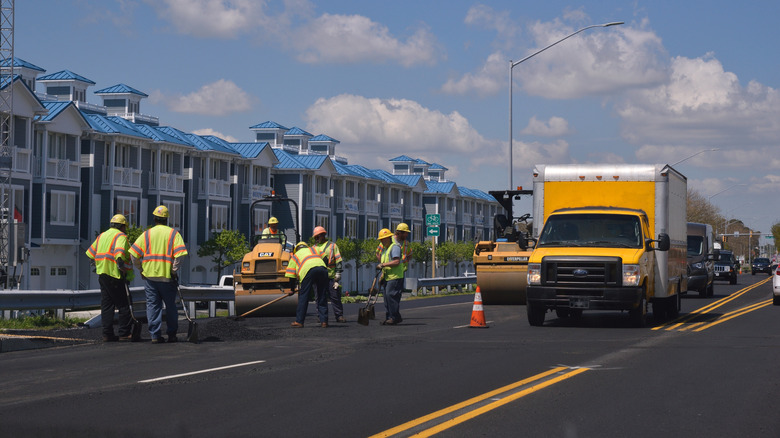
There are a variety of moving parts to this issue, starting with the proven fact that most work-zone crashes occur on what are called “arterial roads.” Arterial roads connect local roads to major interstates.
You will often see people traveling on arterial roads using various transport modes. These modes commonly include walking, cycling, driving, or public transportation. You would possibly recall how one truck driver clogged an Oakland arterial road after spilling meat. All that traffic, combined with changes to traffic patterns from the development, could be enough to overwhelm travelers. Nor does it help that speeding — the number-one consider construction-zone crashes — is so common on arterial roads.
The AGC survey also cited distracted driving as certainly one of the most important causes of labor zone crashes. Despite some states making it illegal to even touch your phone while driving, many motorists proceed doing so. One survey from the AAA Foundation for Traffic Safety found that over 90% of drivers perceived scrolling through social media, texting or emailing, and reading on a hand-held phone as very dangerous. Nevertheless, 10% of respondents reported scrolling social media, 28% admitted to sending a text or email, and 38% copped to reading their phone while driving. You are still obviously open to cognitive distraction when going hands-free.
What can lower work zone crashes is a five-fold approach. This approach includes avoiding work zones when possible, specializing in the duty at hand, reducing speed, keeping a wide-enough gap with the automotive ahead, and, if you’ve to alter lanes, making your move as soon as possible.
This Article First Appeared At www.jalopnik.com
