




It has finally happened: the Federal Aviation Administration has certified the Boeing 737 Max 10, meaning that the complete range of the corporate’s best-selling aircraft is now suitable for delivery to airlines within the U.S. The ten variant is the biggest of the 737 Max family, in a position to seat as much as 210 passengers in a two-class configuration, making it something of a successor to the mid-size 757. It now joins its siblings, the 8 and 9 variants which were flying for years, and the smallest 7 variant that only got certified a couple of months ago. That is great news for Boeing, which is on a hot streak currently: It recently recovered the power to self-certify individual planes for safety and overtook archrival Airbus in annual sales.
The 737 Max 10’s certification was stuck on the runway for a very long time before finally achieving liftoff. The variant flew its first test flight way back in 2021. This was after the horrible 737 Max crashes of 2018 and 2019, so the FAA was quite suspicious of the corporate and really put this model through the wringer. As well as, the Aircraft Certification, Safety, and Accountability Act was passed in 2020, mandating much stricter standards. The 737 Max 10 is the primary plane to undergo the brand new process, though it took five years. You may be pleased to learn that each Boeing and the FAA are aware of a software glitch that messes with the navigation system, but never mind that! The plane is flyable, and you would possibly well be on one sometime next yr.
What’s higher about being greater
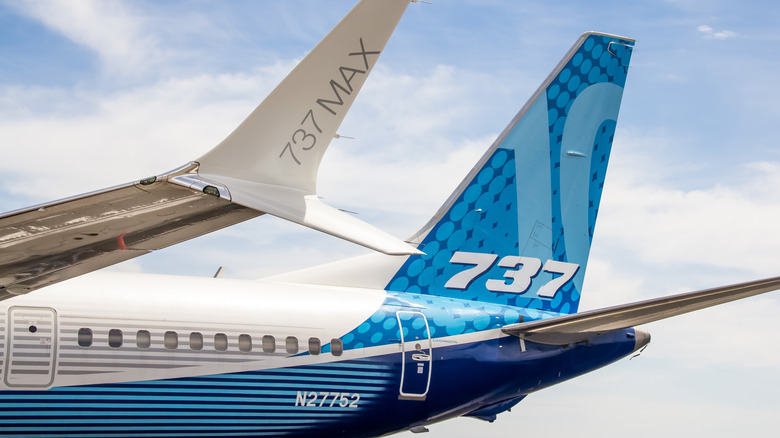
Each of the 737 Max variants has its purpose. For the ten, being larger signifies that it will probably handle a route’s passenger traffic in fewer flights, giving it the bottom per seat cost of any single-aisle aircraft, in line with Boeing. Functionally, it is a substitute for the old 757, which the aviation sector has been waiting for a very long time.
With a 3,100-nautical-mile range, the ten can cover a broad range of routes; nevertheless, that is the shortest range of any 737 Max, which limits its appeal a bit. Against this, the tiny 7 can go 3,800 nautical miles, which may cover the vast bulk of routes, though it will probably only carry as much as 160 passengers in a two-class configuration. Still, the 7’s light weight means it’s great for high-altitude or high-temperature airports.
The all-around champions listed below are the 8 and its very close twin, the 9. You’ve got probably been on one. The previous can take as much as 180 passengers as much as 3,500 nautical miles; the latter can take as much as 195 passengers as much as 3,300 nautical miles. These two combined have made the 737 Max into Boeing’s top seller ever. Getting the 7 and 10 certified adds icing to that cake.
It’s a superb amount of icing, though, since over 30% of current 737 Max orders are for the ten variant. Easy Flying reports that Canadian airline WestJet shall be the primary to get the shiny recent planes in early 2027 (provided that Canadian regulators also certify them). Boeing will then fulfill orders, all 1,555 of them, for other customers everywhere in the world. Now all Boeing has to do is get the 777X finally certified.
This Article First Appeared At www.jalopnik.com
